Airtable Pricing Explained (2026): The Per-Seat Math Nobody Does Out Loud
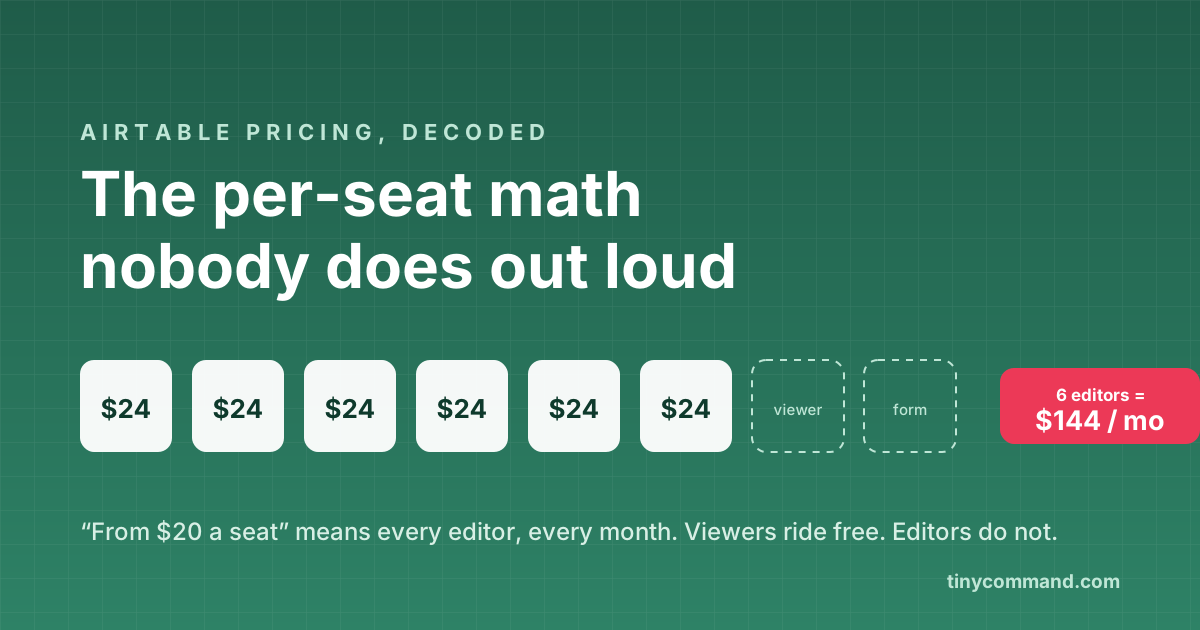
TL;DR: Airtable's 2026 pricing runs Free, Team ($20 per seat monthly billed yearly, $24 billed monthly), Business ($45 to $54 per seat), and Enterprise Scale. The word doing the heavy lifting is seat: every person with edit access to any base is billed, every month. Viewers and form submitters are free. A six-editor team on monthly billing pays $144 a month before a single add-on, and that is the cheapest honest way to read the price tag.
How Airtable billing actually works
Airtable charges per editor. Not per workspace, not per base, and not per active user. If someone can edit one table in one base, they are a billed seat for the whole month. Read-only collaborators, people filling in forms, and viewers of shared links cost nothing, which is genuinely fair and worth crediting.
The catch is organizational, not mathematical. Edit access spreads. The contractor who updates one field, the founder who pops in quarterly, the analyst who fixes a formula twice a year: each becomes $24 a month on the monthly Team plan. Most teams audit their seats for the first time only when the invoice doubles.
Airtable plans in 2026
| Plan | Price per seat | Records per base | Automation runs | Worth knowing |
|---|---|---|---|---|
| Free | $0 | 1,000 | limited | Up to 5 editors. A real free tier, good for trying things |
| Team | $20/mo annual · $24 monthly | 50,000 | 25,000/mo | The default paid tier. 20 GB attachments per base |
| Business | $45/mo annual · $54 monthly | 125,000 | 100,000/mo | SSO, admin panel, two-way sync |
| Enterprise Scale | custom | 500,000+ | custom | Annual contract territory |
The worked example: six people, one CRM base
A small agency runs its client tracker in Airtable. Six people need edit access: two founders, three account managers, one ops lead.
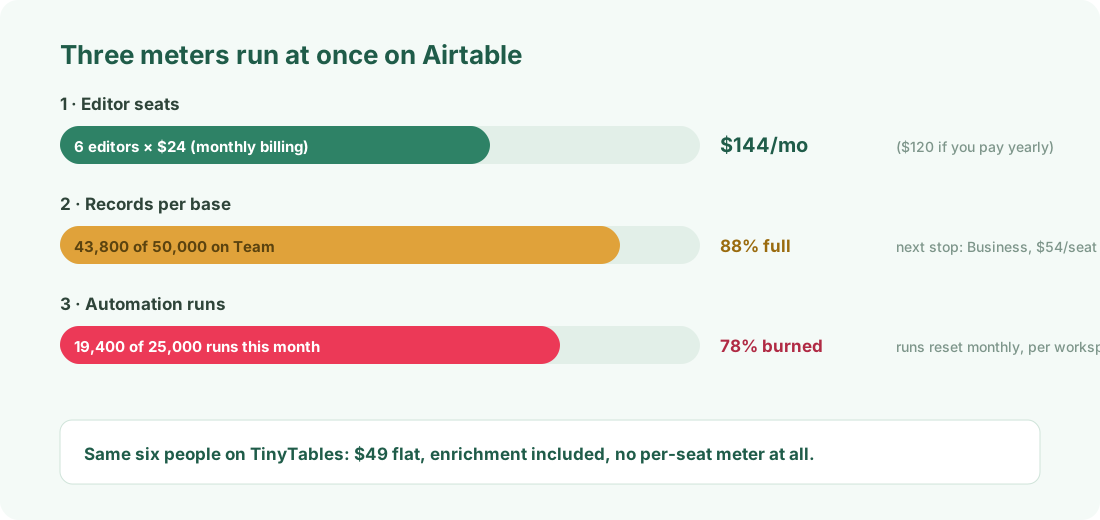
- Monthly billing: 6 × $24 = $144 a month, $1,728 a year.
- Annual billing: 6 × $20 = $120 a month, $1,440 a year, paid up front.
- Add the freelancer who updates deliverables? Seven seats. The price of the tool tracks your org chart, not your usage.
Now layer the second meter. The Team plan caps records at 50,000 per base. An active agency CRM with contacts, deals, tasks, and a few years of history gets there sooner than people expect, and the next stop is Business at roughly double the per-seat price. The third meter, automation runs, resets monthly and counts every script and trigger firing. Three meters, one bill, and any of them can be the one that forces the upgrade.
There is a fourth cost the plans page does not show: connecting Airtable to anything outside it. Airtable's own automations cover in-base logic, but syncing a form, a CRM, or an email tool onto that data usually means adding Zapier or Make, each its own subscription starting around $29/month. This is not unique to Airtable, most single-purpose databases have the same gap, but it means the real monthly cost of a working setup is the seat total plus whatever glue software gets you the rest of the stack.
Annual or monthly: the seat-creep bet
Annual billing looks like the obvious choice. $20 a seat beats $24, a flat 17% off for committing upfront. The six-editor team from the worked example above saves $288 a year by paying annually instead of month to month.
The catch is the same seat creep the rest of this page is about. A 12-month Airtable contract prices in the editor count you have on day one, not the one you will have in month eight. Standard annual SaaS terms let you add seats mid-contract (at the annual rate, pro-rated) but not remove them until renewal, so the contractor who gets edit access in March is a paid seat through the end of the term whether or not they are still using the base in June. Monthly billing costs $4 more per seat but lets you drop a seat the moment someone stops needing edit access, which for a team whose editor list actually changes over a year can be the cheaper option despite the higher sticker price. The annual discount is worth taking only if the editor list has been stable for a while and you are confident it will stay that way.
Where Airtable is genuinely the right choice
Airtable earned its position. The relational model with linked records, lookups, and rollups is the best-in-class way to teach a team what a database is without saying the word. Interface Designer turns bases into passable internal apps. The template Universe is enormous. If your need is a flexible internal database with light automation and your editor count is stable and small, Airtable is a fine home, and our TinyTables vs Airtable comparison is explicit about those wins.
If the seat meter is the problem
The alternative pattern is flat pricing with the database as one piece of a wider stack. TinyTables gives you the relational database (30+ field types, linked records, kanban, calendar) inside Tiny Command's $49 flat plan, with two differences that matter to the Airtable math. First, no per-seat billing for the team sizes most small businesses run, so seat number seven costs nothing. Second, data enrichment is built into the table: company and contact lookups fill columns automatically, which on Airtable requires a separate enrichment subscription wired in through middleware. If you are mapping the wider market, the NocoDB comparison covers the self-hosted route, and our pricing page shows the whole-stack math next to the tools it replaces.
Airtable pricing FAQ
How much does Airtable cost per user in 2026?
Team is $20 per editor per month on annual billing or $24 month-to-month. Business is $45 to $54 per editor. Free covers up to five editors with 1,000 records per base. Only editors are billed; viewers and form submitters are free.
Does Airtable charge for read-only users?
No. Read-only collaborators, form submitters, and people opening shared links are free on Team and Business plans. The billing line is edit permission on at least one base.
What happens when I hit Airtable's record limit?
The base stops accepting new records until you archive, split the base, or upgrade. Team caps at 50,000 records per base and Business at 125,000, which active CRM-style bases reach faster than teams expect.
Is there an Airtable alternative without per-seat pricing?
TinyTables inside Tiny Command runs on a flat $49 plan with the whole stack included (forms, workflows, AI agents, email) and enrichment built into the database itself. Pricing facts above are from Airtable's official pricing page, re-verified July 2026.